
George W. Wyatt: The Patriarch
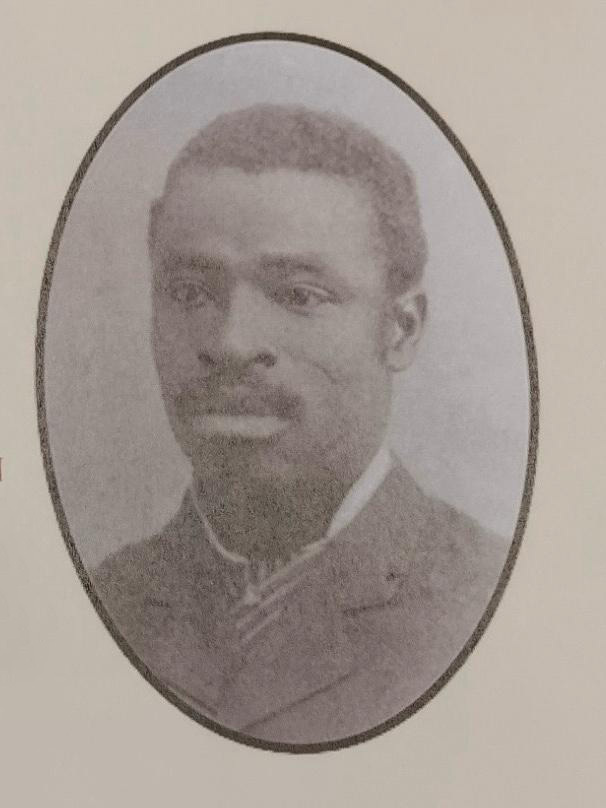
Born in December 1859, George W. Wyatt is recognized as a pioneering African American legislator who significantly impacted Texas politics during the post-Reconstruction era.
G W Wyatt Served as a representative in Texas House District 53 in 1883, Wyatt played a crucial role in advocating for African American rights and representation at a time of systemic challenges.
Beyond his political endeavors, Wyatt was a farmer and a minister who focused on uplifting his community in Hempstead and Waller County. His commitment to education and empowerment is immortalized in his written works and the historical records that document his influence in Hempstead and Waller County.
Historical Context of the Land
George W. Wyatt acquired land in Waller County, Texas, during the post-Reconstruction era. This land was pivotal not only for personal and agricultural use but also became part of a broader educational mission.
Acquisition and Purpose
In 1876, the Texas legislature established the Alta Vista Agricultural and Mechanical College for Colored Youth, which eventually evolved into Prairie View A&M University. The land was vital in creating educational opportunities for African Americans during a time of significant racial and social challenges.
The land’s strategic location eventually contributed to the establishment of Prairie View A&M University, which has been a cornerstone of education for African Americans for over a century.
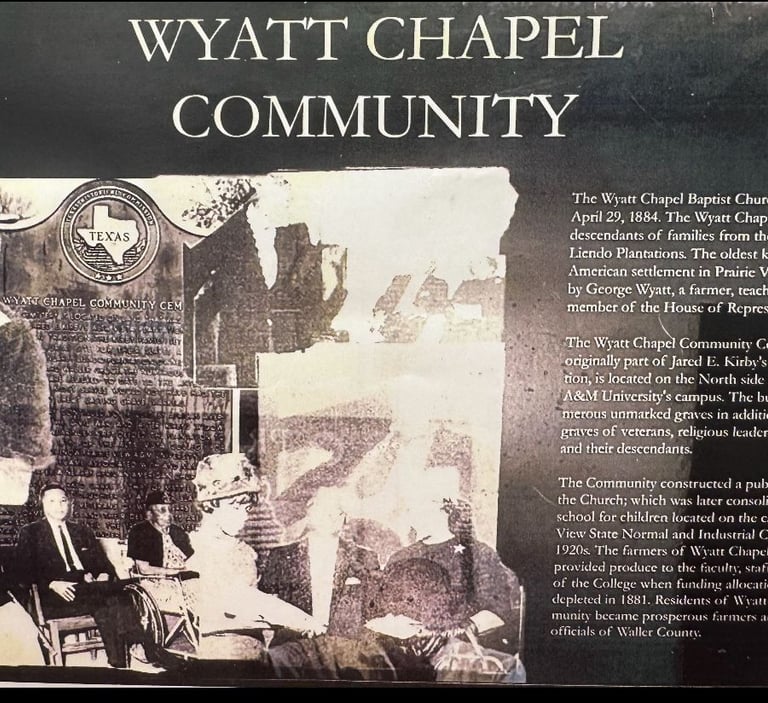
The Wyatt Chapel Cemetery, adjacent to the university, serves as a historical marker that indicates the presence of George W. Wyatt in the community. The cemetery is named after his church ,whose first pastor was Rev. George W. Wyatt, underscoring his deep roots and contributions to the local area.
Wyatt passed away on October 1, 1921, but his legacy lives on through institutions like the GW Wyatt institute of excellence,, and the G W Wyatt Federation. The new legislative force Birthed according to the framework of the Wyatt legacy, indoctrinates hi values of commitment, underscoring to education and empowerment.
The Role of Bishop Dr. Walter Pendleton
As the great-grandson of George W. Wyatt, Bishop Dr. Walter Pendleton carries forward this legacy, .
Continuing the Legacy
As the great-grandson of George W. Wyatt, Bishop Dr. Walter Pendleton carries forward this legacy of strength.
Bishop Dr. Walter Pendleton not only inherits the physical land but also the ideals and vision of his great-grandfather. His leadership at the Pendleton Chapel Seminary, now Pendleton’s ton Chapel University emphasizes the importance of education and service, furthering the family’s commitment to these values. Bishop Dr. Walter Pendleton carries forth the torch of legacy ignited by his great-grandfather. As a leader. His work emphasizes the importance of honoring the contributions of those who came before him, while paving the way for future leaders.
The land, rich in history, has been in the Wyatt family for generations, symbolizing the family’s resilience and dedication to education. This legacy not only connects them through blood but also through shared values and impactful contributions to society. The land owned by George W. Wyatt, on which Prairie View A&M University is situated, is a significant aspect of both his legacy and the university’s history. Understanding this connection highlights the enduring impact of the Wyatt family in Texas.
Prairie View A&M
University, founded in 1876, has sat on this land for more than 100 years, growing into a vital institution for higher education in Texas. The university has played a crucial role in educating generations of African Americans, aligning with the values championed by the Wyatt family.
The historical ties between the Wyatt family and Prairie View A&M University symbolize a shared vision makes it a fitting backdrop for ongoing initiatives.
A New Generation of Leadership
As the world becomes increasingly interconnected, Destiny represents a new generation of leaders who are prepared to tackle contemporary challenges. With a rich heritage of advocacy for African American rights and community upliftment, she is well-equipped to navigate the complexities of modern society. The lessons learned from her ancestors provide a solid foundation upon which she can build a future dedicated to justice, equality, and service
Generations of Change
The narrative of the Wyatt family is not just about the past; it serves as an inspiration for future generations. Destiny’s journey will undoubtedly inspire others to pursue their paths in leadership, education, and community engagement. The legacy of George W. Wyatt and Bishop Dr. Walter Pendleton continues to resonate, reminding us that the fight for progress is ongoing and requires the contributions of each new generation.
As we honor the achievements of the Wyatt family, it is clear that their legacy is far from static; it is a living, breathing entity that adapts and grows with each new generation. The future of the Wyatt legacy, now in the capable hands of Destiny Kesee Pendleton, promises to be one marked by innovation, resilience, and they represent a lineage that has consistently in the pursuit of a better future.
A Legacy That Endures